


How Cleaning Drones Are Transforming High-Rise Facade Cleaning
Insights on industrial UAV technology, applications, and industry trends.
Keeping high-rise building facades clean is a demanding task. Glass curtain walls, stone facades, and other exterior surfaces are constantly exposed to dust, rain, pollution, and other environmental contaminants. For traditional cleaning teams, reaching these surfaces often means working at height with suspended platforms, ropes, scaffolding, or other specialized equipment.
These methods can be time-consuming, labor-intensive, and challenging to deploy, especially when buildings have complex structures or hard-to-reach areas.
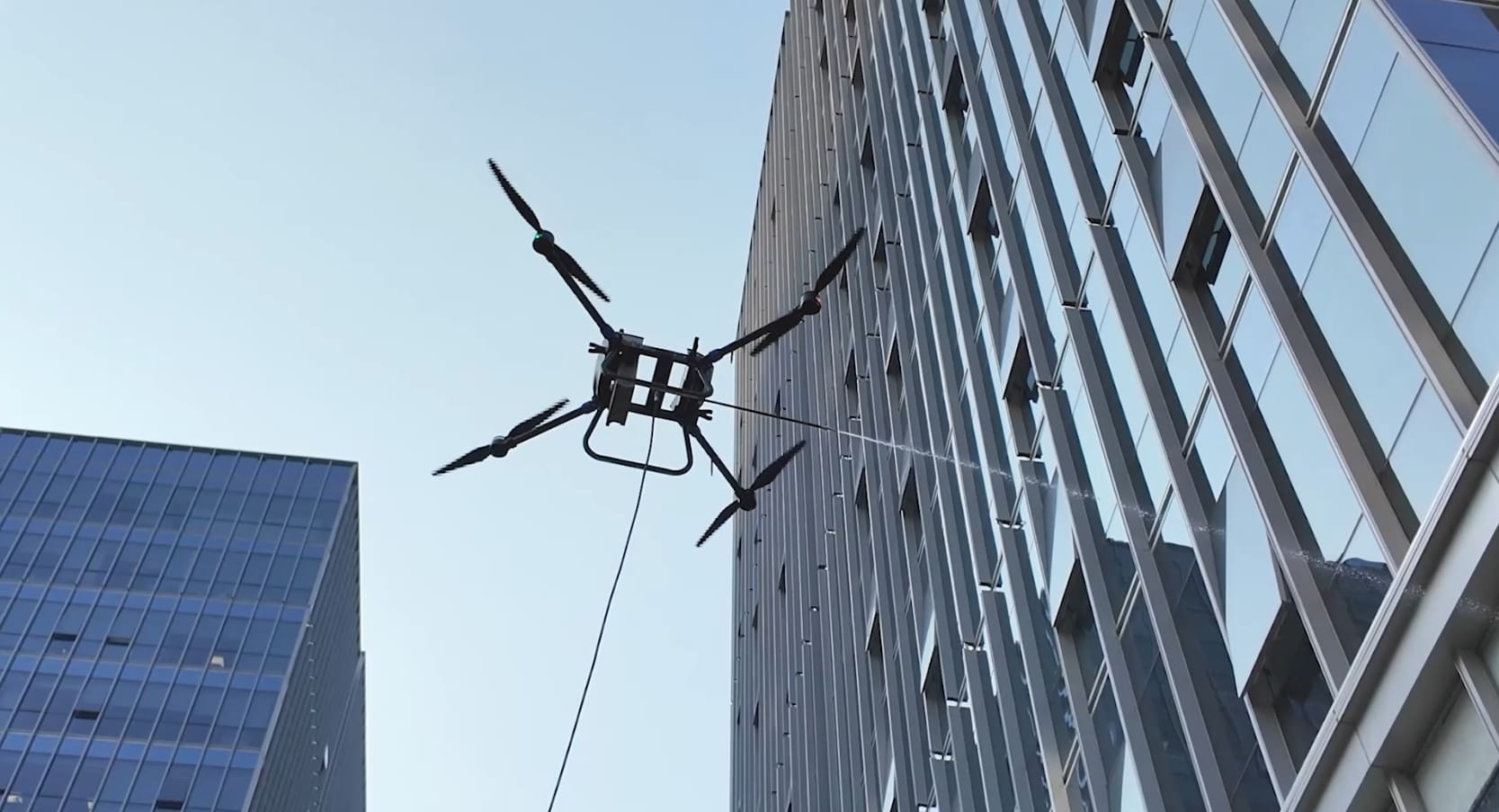
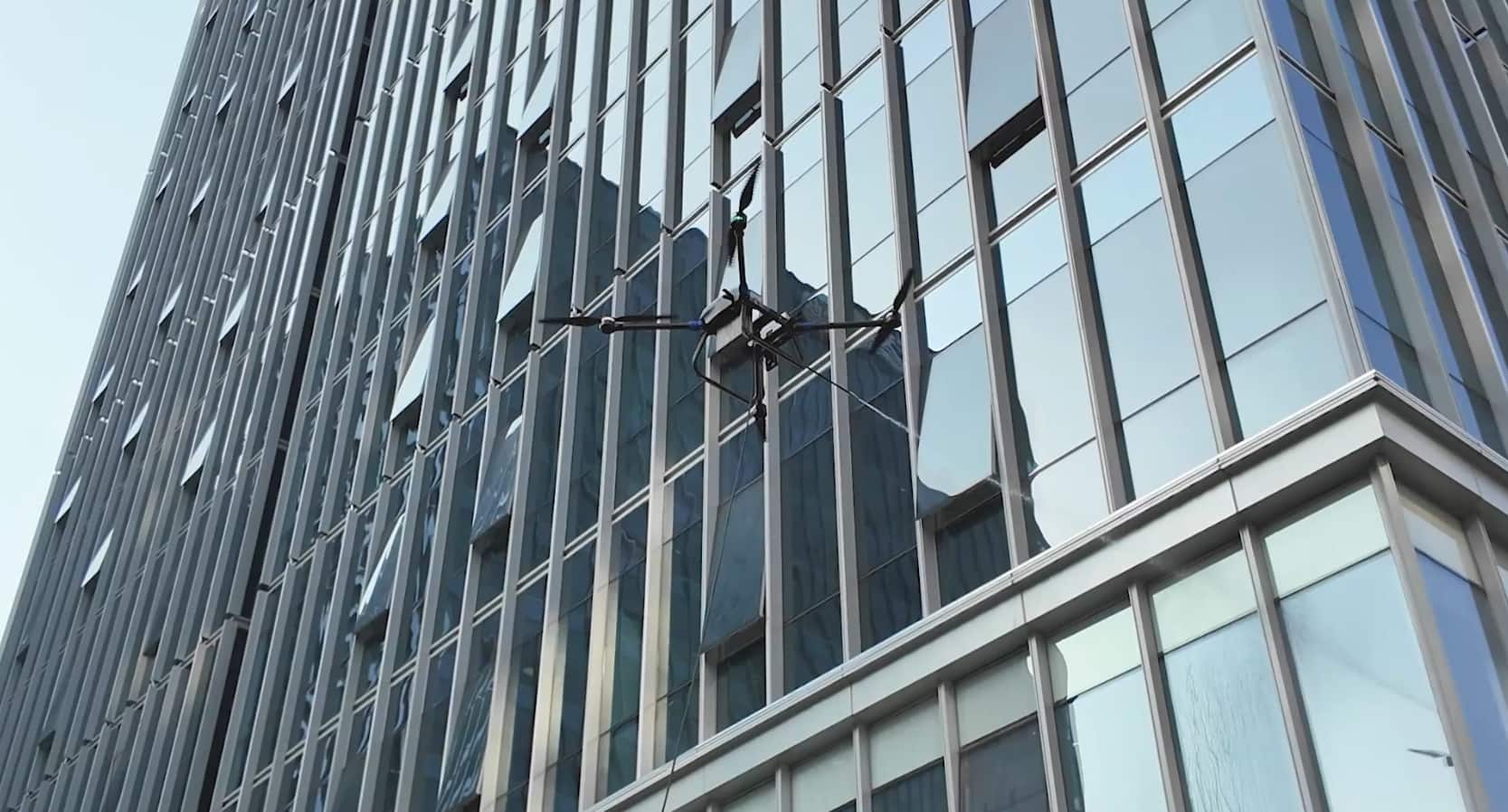
Cleaning drones offer a new approach. By moving cleaning equipment from the building side to the air, cleaning drones can help operators reach high-rise facades more flexibly while keeping personnel away from the immediate high-risk work area.
Why Is High-Rise Facade Cleaning Challenging?
High-rise facade cleaning involves more than simply spraying water onto a wall.
Working at height
Traditional facade cleaning often requires workers to operate at significant heights. Rope access and suspended platforms can expose workers to risks associated with height, wind, and changing weather conditions.
Difficult-to-reach areas
Modern buildings often feature large glass curtain walls, recessed sections, irregular facades, and architectural structures that can be difficult to access with conventional equipment.
High labor requirements
Large buildings can require multiple workers and long operating hours to complete a single cleaning project. Equipment setup and relocation can also add considerable time to the job.
Water and cleaning efficiency
Maintaining consistent water pressure and coverage across a large facade can be difficult, particularly when the cleaning system needs to be moved frequently.
These challenges have created demand for safer, more flexible, and more efficient approaches to facade maintenance.
How Can Cleaning Drones Help?
A cleaning drone integrates the flight platform, water delivery system, positioning technology, and cleaning equipment into one solution.
Instead of placing workers directly on the facade, the drone carries the cleaning system to the working position.
This can bring several advantages.
1. Reduce exposure to high-altitude work
One of the biggest advantages of drone-based cleaning is the ability to move the cleaning equipment into the air without requiring workers to directly access the facade.
Operators can control the drone remotely while monitoring the working area through an FPV camera.
This can help reduce personnel exposure to high-altitude working environments.
2. Reach complex facade structures
A compact drone can approach areas that may be difficult for conventional cleaning equipment to access.
This is particularly useful for:
High-rise glass curtain walls
Building facades
Recessed exterior surfaces
Hard-to-reach architectural structures
3. Flexible deployment
Traditional equipment may require scaffolding, suspended platforms, or other preparation before cleaning can begin.
A cleaning drone can be deployed more flexibly, helping operators reduce setup requirements and move between different working areas more efficiently.
4. Consistent high-pressure water delivery
For facade cleaning, water pressure and flow rate directly affect cleaning performance.
A dedicated cleaning drone can maintain a stable water supply through an external high-pressure water hose, allowing continuous operation without repeatedly refilling an onboard tank.
Meet the TopXGun C15 Cleaning Drone
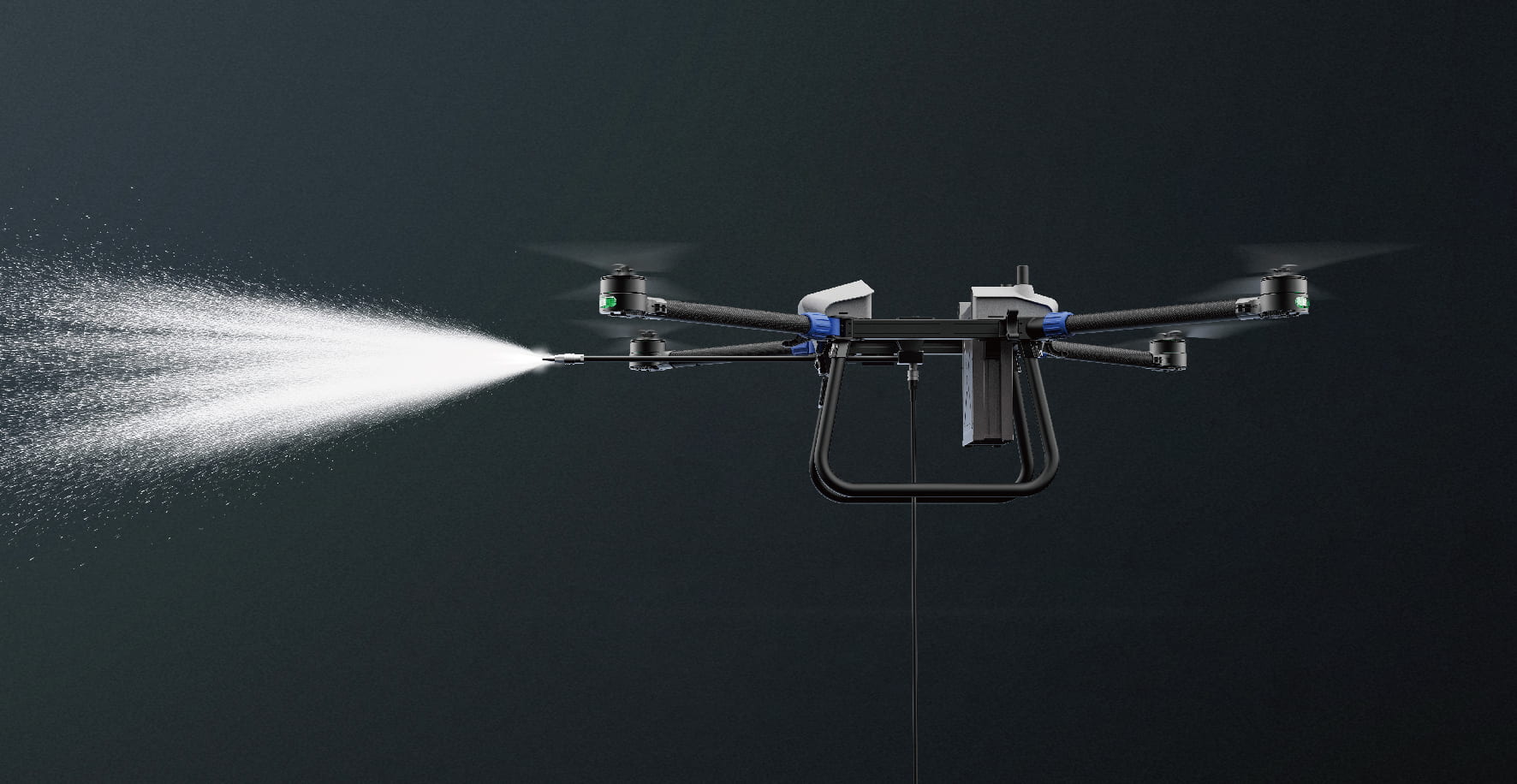
TopXGun C15 is designed specifically for aerial cleaning applications, providing a more flexible solution for high-rise facade maintenance.
Rather than carrying a limited amount of water onboard, the C15 uses an external water supply system. This allows the drone to operate continuously while connected to a high-pressure water source.
Its compact structure, positioning system, obstacle detection technology, and FPV vision system are designed to support more controlled cleaning operations.
Key Features of the TopXGun C15
Lightweight and compact design
The C15 features a compact structure designed for flexible operation around buildings.
Its modular design allows for easier assembly and maintenance, while IP67 protection helps the drone operate in environments exposed to water and dust.
Millimeter-wave radar for building distance detection
Maintaining an appropriate distance from a building is critical during facade cleaning.
The C15 uses millimeter-wave radar to detect the distance between the drone and the building, helping operators maintain a more controlled flight position during cleaning operations.
FPV vision for real-time monitoring
The FPV system provides a real-time view of the working area.
Operators can monitor the facade and cleaning position remotely, which is particularly useful when working on areas that are difficult to observe directly from the ground.
High-precision RTK positioning
The C15 supports high-precision RTK positioning, providing more accurate positioning during flight.
Combined with radar and FPV vision, this helps operators maintain greater control when working close to building surfaces.
Continuous water supply
The C15 connects to an external water source through a high-pressure hose.
This eliminates the need to frequently stop and refill an onboard water tank, making it suitable for longer cleaning operations.
High-pressure and high-flow cleaning
The cleaning system delivers high-pressure water with a large flow rate, helping remove dust, dirt, and other contaminants from facade surfaces.
The combination of pressure and flow allows operators to cover larger working areas more efficiently.
A New Approach to High-Rise Building Maintenance
As buildings become taller and architectural structures become more complex, traditional facade cleaning methods face increasing challenges in safety, labor, and efficiency.
Cleaning drones provide another option.
By keeping operators on the ground while bringing cleaning equipment to elevated surfaces, drone-based cleaning can help reduce exposure to high-altitude work and provide a more flexible way to maintain building exteriors.
With its compact design, high-precision positioning, radar-based distance detection, FPV monitoring, external water supply, and high-pressure cleaning system, the TopXGun C15 is designed to bring aerial technology into a new generation of facade cleaning.
The future of high-rise facade cleaning may not be about putting people higher—it may be about putting the equipment in the air.